Best Cyber Security Course in Bangalore.
8-month full-stack cyber security programme. ₹96,000 all-inclusive (after 20% discount, GST included). Multi-vendor labs across Cisco, Palo Alto, Check Point, and Fortinet — running 24×7. 100% placement guarantee, contractual.
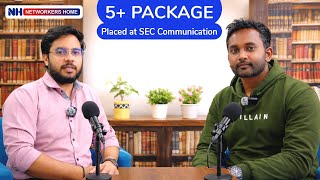
Networkers Home runs the programme from HSR Sector 6, Bangalore — operating since 2007. Cyber security graduates from recent batches have landed roles at Barracuda, Aryaka Networks, SEC Communication, Movate, ST.Fox, Tribastion, Airowire Networks, Zscaler, and others — placement bands documented further down with verified video testimonials from named alumni.
Salary outcomes range from ₹5.5 LPA at fresher SOC entry to ₹18 LPA for Cloud Security Engineer roles. Senior architect tracks reach ₹25–45 LPA over 5+ years. The full salary table is sourced from the last 24 months of institute placements, not industry estimates.
Three vendor R&D centres. Continuous hiring demand.
Bangalore isn't just a city for cyber security training — it's the city where the firewall hardware itself is built. That structural fact shapes what the local hiring market actually wants.
R&D centre for global Cisco firewall and routing platforms.
Cisco's Bangalore R&D presence is one of the largest engineering footprints any networking vendor has globally. Hiring panels at Cessna Business Park interview candidates with hands-on familiarity with ASA 5500-X, Firepower 4100/9300, and the broader Cisco security stack — the same hardware the panel themselves develop and ship.
Engineering centre for the PA-Series next-generation firewall.
Palo Alto's Bagmane operations focus on the PAN-OS platform powering their flagship firewalls. Network Security Engineer hires at this centre demonstrate fluency with Palo Alto policy structure, application identification (App-ID), user identification (User-ID), and the security profiles that sit above zone-based rules. Networkers Home labs run PA-Series hardware specifically so this depth is reachable by enrolled students.
Operations and engineering for the Check Point Quantum platform.
Check Point's Bangalore presence at Manyata Tech Park supports the Quantum security gateway product line — appliances that protect a significant share of large-enterprise perimeter networks worldwide. Hiring expects candidates to know the SmartConsole UI, policy installation flow, and the management server / security gateway architectural split that defines Check Point deployments.
… generate continuous, year-round demand for cyber security engineers in Bangalore. Demand isn't seasonal. Demand isn't speculative. It's structural — the firewalls these vendors build need engineers in their R&D centres, in the GCCs that deploy them at customer scale, and in the managed-service providers running them across India's enterprise IT estate.
What the 8 months actually cover.
The programme is the same Cloud Security & Cybersecurity full-stack track running on the main course page — networking foundations → offensive security → pen testing → AWS cloud → cloud security & DevSecOps → container security → SOC operations → career launch. One month per phase. Each builds on the previous.
Source: /best-cloud-security-cybersecurity-course-in-bangalore/
Month 1 — IT, Networking & Security Foundations
FoundationIT infrastructure fundamentals · TCP/IP, DNS, DHCP, HTTP/HTTPS · Windows & Linux OS basics · CIA triad, authentication, authorization · Threat landscape and attack vectors · NIST and ISO 27001 frameworks. Lab: configure a secure network environment with firewall rules and access controls.
Month 2 — Linux and Ethical Hacking
Offensive SecurityLinux system administration · Command line and shell scripting · Users, permissions, privilege escalation · Ethical hacking and legal frameworks · Reconnaissance and information gathering · Vulnerability scanning with Nessus and OpenVAS. Lab: set up Kali Linux and perform vulnerability assessments on target systems.
Month 3 — Pen Testing
Red TeamOWASP / PTES methodology · Web app testing (SQLi, XSS, CSRF) · Network penetration and exploitation · Metasploit framework · Password cracking and authentication bypass · Professional report writing and remediation. Lab: end-to-end pen test on a vulnerable web application and network.
Month 4 — Cloud Computing & Cloud Operations (AWS)
AWS CoreEC2, S3, VPC, RDS, Lambda · VPC design, subnets, route tables, NAT · IAM users, roles, policies, best practices · CloudWatch monitoring and logging · Cost management · Cloud architecture patterns and high availability. Lab: deploy a multi-tier application on AWS with proper IAM and monitoring.
Month 5 — Cloud Security & DevSecOps
Security IntegrationCloud security architecture · AWS GuardDuty, Security Hub, Config · Infrastructure-as-Code security (Terraform, CloudFormation) · CI/CD pipeline security · Secrets management and encryption · SOC 2, PCI-DSS, HIPAA basics. Lab: build automated security scanning into a CI/CD pipeline.
Month 6 — Advanced Cloud Security & Container Security
Container DefenseDocker security hardening · Kubernetes RBAC, network policies, pod security · Container image scanning · Service mesh security (Istio) · Cloud-native threat detection · Data exfiltration prevention. Lab: deploy a secure Kubernetes cluster with AI-based threat detection.
Month 7 — Cybersecurity & SOC Operations
Blue TeamSOC analyst workflows · SIEM administration with Splunk and ELK · Log analysis and correlation · Incident detection and triage · Threat hunting · Phishing analysis and email security. Lab: complete SOC analyst simulation with real incident scenarios.
Month 8 — Career Preparation & Placement Readiness
Career LaunchResume building for cloud security and cybersecurity roles · GitHub portfolio and project documentation · Scenario-based technical interview preparation · HR coaching and salary negotiation · AWS, Security+, CEH certification guidance · Direct placement assistance and company connections. Lab: complete capstone security assessment project for portfolio.
CCIE Security trainers running each module.
Faculty pulled directly from the institute's /trainers/ roster. Each trainer below holds at least one CCIE Security or equivalent industry-grade certification, and has 10+ years of hands-on enterprise experience.
Vikas Swami
Founder & Dual CCIE #22239 (Security, R&S)
VPN technologies, cybersecurity, Cisco. Cisco TAC VPN team alumnus (2004). 50,000+ students mentored.
Sushil Mahto
CCIE Security · CCIE Enterprise · PCNSE
Advanced VPN, firewall technologies, security architecture. Cisco TAC background. Structured CCIE lab preparation specialist.
Sanjay Sharma
CEH · OSCP · CISSP · CCNA Security
Ethical hacking, penetration testing, cybersecurity. Has led security assessments for Fortune 500 companies.
Amit Tanwar
CCIE Security · CCNP Enterprise · F5 Certified
CCIE Security, enterprise networks, load balancing, application security. Hands-on data centre management background.
Ajay Kumawat
CCNP Security · PCNSE · AWS Security · Azure Security · SIEM
Enterprise security architecture, SIEM, cloud security, Palo Alto firewalls. Built security architectures for banks and government organisations.
Nikunj Gohil
CCIE Security · CCIE Enterprise · CCNP Security · AWS Security · Azure Security
Bridges traditional network security with cloud security. Hybrid cloud infrastructure security specialist.
Bhim
CCIE Security · CCNP Security · PCNSE
Network security, firewall technologies, VPN. Deep Cisco security technologies expertise; CCIE Security lab specialist.
Jatin
5× AWS · 4× Azure (Security Specialty incl.)
AWS & Azure cloud architecture, cloud security, multi-cloud. Owns the Month 4–6 cloud / DevSecOps modules.
Full faculty list including bios, course assignments, and student counts: /trainers/. Source of record: src/data/trainers.ts on the live site.
Real production hardware. No Packet Tracer. No GNS3 stand-ins.
Bangalore vendor R&D centres ship this hardware globally. Hiring panels recognise candidates with hands-on familiarity instantly — because they themselves work with the same gear daily.
Lab time isn't rationed. It's unlimited.
Most institutes ration lab time across batch members because the rack is a shared physical resource. Networkers Home solves this with software-orchestrated remote labs. Every enrolled student gets a personal credential to vpn.networkershome.com — connecting to real Cisco / Palo Alto / Check Point / Fortinet hardware on the HSR Sector 6 campus.
Practice firewall policies at 2 a.m. if that's when you're sharpest. Build OSPF topologies on weekend mornings. Triage simulated incidents during your lunch break. Classroom hours are for guided learning. The deep practice — the part that actually builds engineering muscle — happens on your own schedule.
9 free browser-based labs. Hundreds of scenarios. No installs. No licences.
The institute publishes 9 free, browser-based simulators on its open-source GitHub organisation — covering the same vendor stack students later train on with production hardware. Industry equivalents (Cisco Modeling Labs subscription, Palo Alto VM-Series, FortiGate VM, Splunk Cloud trial) cost ₹50,000–₹2L per lab year. These cost ₹0. No login, no install, no time limit.
Source: github.com/NETWORKERS-HOME-123 — every link below verified live (HTTP 200) at build time.
Cyber Attack & Defense Simulator →
Ransomware, DDoS, insider-threat and phishing scenarios. For Security+, CEH, and SOC analyst readiness.
Palo Alto PAN-OS Simulator →
Zones, security policies, NAT, App-ID, User-ID, Threat Prevention. PCNSA / PCNSE prep.
Fortinet FortiGate Simulator →
Policy, SD-WAN, VPN, UTM features. NSE 4 / NSE 7 readiness.
Zscaler ZIA Simulator →
URL filtering, SSL inspection, DLP, sandbox policies. SASE + ZDTA prep.
Cisco ISE Simulator →
802.1X, MAB, TrustSec, guest flows, policy sets. CCNP Security.
Cisco IOS CLI Simulator →
OSPF, ACLs, NAT, DHCP, STP, IPv6, VLANs. CCNA / CCNP foundation.
SD-WAN Simulator →
Overlay tunnels, SLA-aware routing, branch-to-hub designs. ENSDWI 300-415.
Cisco DNA Center Simulator →
SD-Access fabric, device onboarding, assurance, automation. ENSLD / ENSDWI.
Network Packet Flow Simulator →
Watch packets traverse switches, routers, firewalls. See encapsulation, decapsulation, ACL drops, NAT translation in real time. The fastest way to internalise OSI-stack mechanics — most students who use this report passing CCNA networking-fundamentals questions on the first attempt.
All 9 simulators are open-source on the institute's NETWORKERS-HOME-123 GitHub organisation — code transparent, no vendor licences, no enterprise contracts. The cumulative coverage runs to hundreds of distinct lab scenarios, available 24×7 from any browser. This is what "lab infrastructure as charity" looks like in practice — the same expensive enterprise experience, free for any student, anywhere.
Full hub for the 9 free simulators (cyber-security ordering): /free-cyber-security-labs/ — also available in network-engineering ordering at /free-network-security-labs/.
What you'll actually earn.
Verified across the last 24 months of institute placements in Bangalore. Pre-tax CTC. Bands are role-specific and experience-banded — not generic averages.
| Role | Experience | Salary |
|---|---|---|
| SOC Analyst L1 | Fresher | ₹5.5–9 LPA |
| SOC Analyst L2 | with 8-Month Experience Letter | ₹8–12 LPA |
| Network Security Engineer | — | ₹8–14 LPA |
| Cloud Security Engineer | — | ₹10–18 LPA |
| Senior Network/Security Engineer | 3–5 years | ₹15–25 LPA |
| Security Architect | 5+ years | ₹25–45 LPA |
| CCIE Security Consultant | — | ₹30–60 LPA |
Source: institute placement records, 24-month rolling window. Lower band reflects fresher entry; upper band reflects vendor R&D + carrier-tier roles. See the full placement record →
Who hires cyber security graduates.
Five categories of hiring demand. The same partner network powers placement across all three flagship programmes — meaning cyber security graduates compete in the broader security demand surface, not a narrow slice.
| Category | Hiring Partners |
|---|---|
| Security product companies | Cisco, Palo Alto Networks, Check Point, Fortinet, CrowdStrike, Rapid7 |
| Network and SD-WAN vendors | Aryaka, Akamai, F5, Citrix, Cloudflare |
| Large enterprise IT services | TCS, Wipro, Infosys, HCL, Tech Mahindra, Capgemini, Cognizant |
| Product / SaaS companies | Flipkart, Amazon India, SAP Labs, VMware, Atlassian, Razorpay, Postman, Browserstack |
| NOC/SOC managed-service providers and GCCs | Across Manyata Tech Park, Bagmane Tech Park, Embassy Tech Village, Whitefield, and Outer Ring Road |
+ 780 more partners across networking, security, cloud, telecom, and managed-services sectors. The named brands above are a representative slice — the rest include regional ISPs, fintech NOCs, government contractors, DevSecOps consultancies, and Bangalore-based MSPs operating across Manyata, Bagmane, Embassy Tech Village, Whitefield, and Outer Ring Road.
"Fresher tag" — the silent kill in Indian IT hiring.
Indian recruiters auto-filter resumes lacking production experience. Most certifications don't break that filter — only verifiable hands-on experience does. The 8-Month Experience Letter from Networkers Home is recognised across all 800+ hiring partners as 8 months of real production work, because that's exactly what it is — paid internship inside the institute's own Network Operations Division, not classroom simulation.
Resume gets read. Interview gets scheduled. The "0-year experience" filter doesn't apply.
Training without a credentialed bridge into the industry doesn't lead to jobs.
The hardest part of cyber security hiring isn't the technical interview. It's getting the resume past the keyword-and-experience filter that screens 95% of applicants out before any human reads them.
The 8-Month Experience Letter exists for exactly this reason. It's not a "completion certificate" — it's a verifiable employment record from a real production environment. Every one of the 800+ hiring partners has accepted it for 18 years.
8 alumni from the recent batch. On camera. On record.
Click any face to watch the alumni explain — in their own words — the programme, the role, and the salary they accepted. Each video is unscripted, recorded the day they joined their hiring company. Visit our YouTube channel (171,000+ subscribers) for hundreds more across all three flagship programmes.
Note on titles: the alumni below are listed by hiring company — most graduates at Barracuda, Aryaka, Movate, SEC Communication, Tribastion, Airowire, Zscaler are working on security-product engineering or NOC/SOC roles, even when the role title reads "Network Engineer". These companies' products are security infrastructure. Title alone underrepresents how many of our placements are doing security work day-to-day.







₹96,000. All-inclusive. EMI from ₹16,000/month.
Programme fee includes 4 months of training, 4 months of paid internship, the 8-Month Experience Letter, 24×7 lab access, monthly Founder Workshop access, and the contractual placement guarantee. GST at 18% is included. The 20% discount is built into the published price — there's no separate haggling.
EMI is available across all programmes — 6-month zero-cost credit-card EMI is the most common option, working out to approximately ₹16,000/month with no interest. Longer tenures up to 12 months come with standard processing fees through NBFC partners.
All three options give you the same programme. Pick whichever matches your cash flow. Bank EMI partners: HDFC, ICICI, Axis, SBI. Full EMI details →
100% placement. Contractual, not aspirational.
"Placement guarantee" means different things at different institutes. Here's what it means here.
| If you… | We guarantee |
|---|---|
| Complete the 8-month programme | Placement |
| Attend the placement preparation modules in Month 8 | |
| Accept reasonable offers within the agreed salary band |
Refund clause applies if conditions on the contract are met but placement does not occur. Full refund policy → · Placement guarantee terms →
18 years. 45,000+ engineers placed.
Networkers Home was founded in 2007 by a Cisco TAC VPN engineer who'd worked at Wipro, HP, Cisco, and Mobily. The technical foundation behind the cyber security curriculum traces directly to that operational background — and to the VPN industry ventures the founder has built since (QuickZTNA, QuickSDWAN, and others). The point isn't credentials for their own sake; the point is that the curriculum is shaped by people who've actually shipped security infrastructure at scale.
Don't take this page's word.
Three independent public platforms. All linkable. All third-party. Cross-check before you enrol.
Frequently asked.
What is the best cyber security course in Bangalore? +
The 8-month full-stack cyber security flagship programme at Networkers Home covers SOC fundamentals, network security, cloud security, and hands-on multi-vendor lab work across Cisco, Palo Alto, Check Point, and Fortinet hardware. Programme structure: 4 months of training + 4 months of paid internship inside the institute's Network Operations Division. Total fee: ₹96,000 after the standard 20% discount, GST included. Placements are contractual — 800+ hiring partners include Barracuda, Aryaka Networks, Akamai, SEC Communication, and others.
What is the salary after a cyber security course in Bangalore? +
Verified placement bands from the last 24 months: SOC Analyst L1 (fresher) ₹5.5–9 LPA. SOC Analyst L2 with 8-Month Experience Letter ₹8–12 LPA. Network Security Engineer ₹8–14 LPA. Cloud Security Engineer ₹10–18 LPA. Senior Network/Security Engineer (3–5 years) ₹15–25 LPA. Security Architect (5+ years) ₹25–45 LPA. CCIE Security Consultant ₹30–60 LPA at the upper end. The lower-end fresher band reflects entry-level SOC roles; the upper end reflects vendor R&D and carrier-tier roles in Bangalore.
Why is Bangalore the best city for a cyber security course? +
Three vendor R&D centres within roughly 12 km of HSR Sector 6: Cisco at Cessna Business Park, Palo Alto Networks at Bagmane Tech Park, and Check Point at Manyata operations. Together they generate continuous demand for engineers familiar with the firewall hardware these companies build. Bangalore is also home to large concentrations of NOC and SOC operations across Manyata, Bagmane, Embassy Tech Village, Whitefield, and Outer Ring Road — hiring at L1/L2/L3 levels nearly year-round.
Are real labs included in the cyber security course? +
Yes. Networkers Home labs run real production hardware: Cisco ASA 5500-X firewalls, Cisco Firepower 4100/9300, Palo Alto PA-Series, and Check Point Quantum appliances. Every enrolled student gets 24×7 remote access to this rack via vpn.networkershome.com — meaning post-class self-practice scales independently of classroom hours. The same hardware these vendor R&D centres ship globally is what students train on.
Is the 100% placement guarantee actually contractual? +
Yes — the 100% placement guarantee applies to the three 8-month flagship programmes (Full Stack Cloud Security & Cybersecurity, Full Stack Network Engineering, Full Stack Network Security). Conditions: complete the 8-month programme, attend Month 8 placement preparation modules, and accept reasonable offers within the agreed salary band. Track record: 18 years above contractual minimum, with 95%+ of each batch placed before Month 8 ends. Refund clause applies if conditions are met but placement does not occur. Full terms at /refund-policy/.
What's the EMI option for the cyber security programme fee? +
EMI is available across all programmes. The 8-month flagship at ₹96,000 (after 20% discount) breaks down to approximately ₹16,000/month on a 6-month zero-cost credit-card EMI. Longer tenures up to 12 months are available through NBFC partners with standard processing fees. Multiple Indian financing partners are integrated at admissions — bank EMI (HDFC, ICICI, Axis, SBI), NBFC (Bajaj Finserv), and education-specific financiers. Full details at /networkers-home-emi-payment-options/.
Will AI replace cyber security jobs? +
AI is automating L1 SOC work — alert triage, basic incident classification, scripted enrichment. The L2/L3/architect tier — incident root-cause analysis, multi-vendor integration, security posture decisions, audit and compliance positioning — remains a human-judgement role. Cyber security candidates most exposed to AI risk are those who never move beyond rote L1 work. The candidates who use entry-level SOC roles as a launchpad into automation, threat hunting, or architecture are seeing their value increase. The CCNP → CCIE Security progression is the AI-resilient path.
Who is the founder of Networkers Home and does he still teach? +
Vikas Swami founded Networkers Home in 2007. He holds Dual CCIE #22239 — Routing & Switching (October 2008) and Security (January 2009), passed within 90 days of each other. Before founding the institute, he worked on the Cisco TAC VPN team in 2004. He runs a monthly Founder Workshop open to current and prospective students; CCIE-level alumni mentoring continues directly through him. Day-to-day classroom instruction is handled by faculty he has trained over 18 years. Read more at /vikas-swami/.
Ready to start?
Talk to admissions with your background and start-date preference. They'll confirm seat availability for the next batch, walk through the EMI options, and book a no-pressure campus visit if you want to see the labs in person before deciding. The monthly Founder Workshop is also open to prospective students — a 90-minute session where you can ask the institute's founder (Dual CCIE #22239) anything about the programme directly.